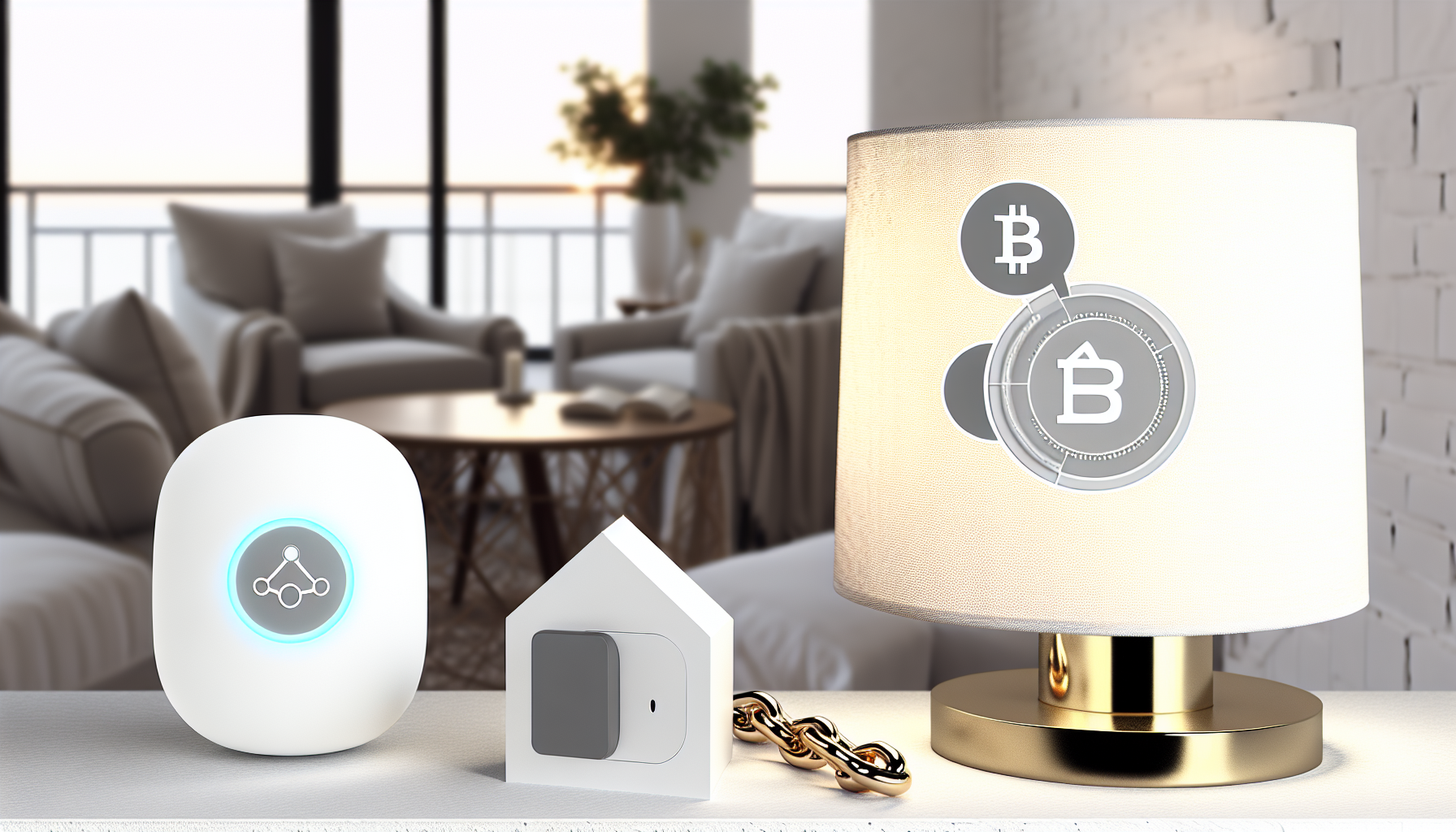
The Role of Blockchain in Securing Smart Home Devices
The advent of smart homes, bolstered by the proliferation of Internet of Things (IoT) devices, has ushered in an era of unprecedented convenience and automation. From intelligent thermostats to automated locks and smart appliances, these IoT devices connect together in a vast network, creating an interconnected web that enables seamless control over various aspects of home life. However, this interconnectedness, while a boon for convenience, introduces significant smart home security risks. Each connected device is a potential entry point for attackers, aiming to exploit vulnerabilities for unauthorized access or data breaches.
A growing body of research indicates the rapid adoption of smart home technology, emphasizing security implications. The integration of blockchain technology offers a promising solution to these concerns. The decentralized nature of blockchain smart home security provides robust protection against intrusions and unauthorized access by eliminating single points of failure that plague traditional centralized systems. This innovation offers a new horizon in the realm of home security, setting the stage for a more secure IoT infrastructure.
Understanding Blockchain Technology: A Digital Revolution
At its core, blockchain technology acts as a distributed digital ledger, recording transactions across various computers. This decentralized approach ensures the integrity of data, as each transaction, or "block," is cryptographically linked to another using unique hashes, effectively creating a chain. This cryptographic linking forms the backbone of blockchain’s security, making it nearly impossible to alter any information retroactively without the consensus of the network.
Blockchain operates through a network of nodes, where each node has a complete copy of the blockchain. This distribution fortifies the network against potential manipulations or single points of failure. Its transparency ensures that all participants within the network can view transactions in real-time, fostering an environment of trust without the need for intermediaries. This decentralization not only safeguards against data breaches but also enhances system resilience.
In the context of smart home environments, blockchain's immutable nature ensures that once data is recorded, it cannot be altered. This transparent, decentralized, and tamper-proof ecosystem facilitates a more secure IoT framework, paving the way for enhanced trust and efficiency in managing smart home systems.
Confronting Smart Home Security Challenges
Smart home ecosystems, rich with connected devices, encounter a spectrum of security challenges, primarily stemming from their centralized architecture. A single point of failure in this architecture can render the entire system vulnerable. Additionally, IoT devices often utilize weak authentication protocols, making them susceptible to hacking and unauthorized access.
Centralized data storage compounds these vulnerabilities by creating attractive targets for cyber-attacks. These infrastructures can be easily compromised, resulting in significant privacy breaches. Moreover, traditional security measures fail to address the IoT landscape's demands, particularly in terms of scalable access control and real-time security management.
Latency is another area where current systems falter. High latency can lead to delays in security responses, exacerbating potential breaches. Attacks such as man-in-the-middle, replay, and impersonation exploit these weaknesses, making robust security frameworks essential for the evolving smart home.
How Blockchain Fortifies IoT Security
Blockchain IoT solutions emerge as a formidable defense against the vulnerabilities faced by traditional smart home systems. By decentralizing control, blockchain distributes authentication and data storage across the network. This distribution significantly mitigates security risks, as it reduces reliance on single entry points that are vulnerable to exploitation.
Decentralization facilitates secure peer-to-peer communication within the IoT framework. Additionally, smart contracts—self-executing contracts with the terms of the agreement directly written into code—play a pivotal role in enhancing security. They automate rule settings, ensuring consistent and reliable operation of IoT devices while preserving privacy.
Blockchain further strengthens security through real-time intrusion detection capabilities. This is achieved by leveraging private blockchain architectures combined with advanced machine learning algorithms, such as predictive analysis. These capabilities allow for swift detection and response to potential threats, ensuring continually robust security for the smart home environment.
Benefits of Blockchain Technology in Smart Home Security
The integration of blockchain technology into smart home systems brings forth a myriad of benefits tailored to address the unique security challenges presented by IoT environments. Chief among these advantages is enhanced data protection. Blockchain's encryption protocols and immutability prevent unauthorized tampering, ensuring the integrity and security of stored data.
- Smart contracts enhance control by providing granular, revocable permissions that prevent unauthorized access. This ensures only authorized entities can interact with the system, safeguarding user privacy.
- Additionally, blockchain reduces reliance on third-party data relays, further protecting against potential privacy leaks.
- User authentication is made more efficient, eliminating redundant checks and ensuring quicker verification processes.
- The low-latency communication framework ensures that security measures respond swiftly to threats, maintaining the system's operational integrity.
- The energy efficiency of blockchain solutions also offers minimal overhead, contributing to sustainable, long-term security solutions for smart homes.
Securing IoT Devices with Advanced Blockchain Strategies
Securing IoT devices within the smart home framework necessitates innovative strategies that blockchain technology effectively provides. Private blockchain layers play a crucial role in intrusion detection, employing real-time sequential deep extreme learning machines (RTS-DELM) for precise threat identification.
Technologies like Zero-Knowledge Proofs (ZKP) offer privacy-preserving access control methods. By validating identities without revealing sensitive information, ZKP ensures secure access to IoT devices. This approach, combined with two-tiered access control policies, facilitates dynamic granting and revoking of device permissions, resistant to tampering.
Notable implementations, such as Comcast's blockchain application, demonstrate the efficacy of these strategies. Comcast utilizes blockchain to dynamically manage device access, showcasing a practical example of robust, real-world application capable of thwarting unauthorized tampering and enhancing security for smart homes.
Envisioning the Future: Blockchain Advancements in Smart Home Security
The future of blockchain IoT in smart home security is ripe with potential advancements, promising to further solidify the integrity and resilience of these systems. Hybrid on-chain/off-chain frameworks are poised to deliver low-latency real-time control, integrating seamlessly with the existing infrastructure to enhance performance.
AI-driven fraud detection is another promising development, elevating the security capabilities of blockchain-integrated smart homes. Integrating AI with Smart Home Systems: Pros and Cons showcases how AI can enhance security measures by quickly identifying potential threats and adapting responses accordingly. However, widespread adoption must navigate challenges such as computational overhead associated with public blockchains, favoring the adoption of private and consortium models that offer better scalability for IoT deployments.
The ongoing evolution of edge-IoT blockchains and incentive mechanisms for data sharing suggests a future where comprehensive, resilient ecosystems protect the privacy and security of smart home environments. These advancements ensure blockchain remains at the forefront of revolutionizing the smart home security landscape.
Reinventing Security Through Blockchain: Decentralization and Trust
In conclusion, blockchain smart home security provides an evolution in the realm of home automation. By replacing centralized control mechanisms with decentralized, trustless networks, blockchain addresses intrinsic vulnerabilities, enhancing security with unprecedented levels of encryption and privacy.
Blockchain's integration into smart home systems is a pivotal shift, offering decentralized trust, immutable records, and the power of smart contracts to safeguard against unauthorized access and malicious threats. It represents not only an advancement in technology but a fundamental change in the way we approach security in the age of IoT.
Unlock the Potential of Blockchain for Your Smart Home
As smart homes continue to evolve, embracing blockchain innovations is crucial for securing IoT devices effectively. By exploring academic studies on RTS-DELM frameworks and reviewing industry pilots like Comcast’s blockchain applications, homeowners and industry professionals alike can glean valuable insights. Staying informed on these advancements ensures your smart home remains safe, integrated, and ready to face future challenges in a rapidly advancing technological landscape. For those interested in taking the next step, learning how to turn your house into a smart home in 2026 can provide practical guidance on implementing these technologies.